


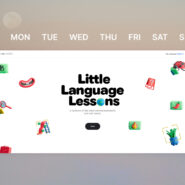

What is Little Language Lessons?
Learning a new language isn’t only about studying textbooks or doing grammar exercises – it’s also about staying curious and making the most of small, everyday moments. Whether you’re ordering coffee, catching a phrase in a movie, or describing things around you, every little interaction is a chance to learn.

That’s exactly the spirit behind Little Language Lessons by Google – a set of fun, bite-sized learning tools powered by Gemini AI. Each one explores how AI can support language learning in real-world situations:
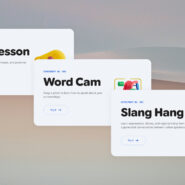
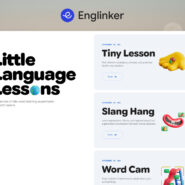
- Tiny Lesson shares useful vocabulary, phrases, and grammar tips based on specific contexts.
- Slang Hang creates casual, natural-sounding conversations to help you pick up real slang and expressions.
- Word Cam lets you point your camera at things around you and instantly learn the English word for them.
These tools aren’t meant to replace traditional studying – they’re designed to keep things fresh, build daily habits, and make learning part of your everyday life.
Author
Little Language Lessons is an AI-powered experimental platform created by Google. Launched in April 2025 as part of Google Labs, the project was developed by a small team of engineers and creative technologists, most notably Aaron Wade.
Who can use Little Language Lessons?
Essentially, anyone with a Google account can access Little Language Lessons, as it is a free web-based experiment. However, because it is part of Google Labs, there are a few specific “house rules” and technical requirements for who can use it:
1. Account & Age Requirements
- Google Account: You must be signed into a personal Google account. It typically does not work with Workspace accounts (like those managed by a school or employer) unless your administrator has specifically enabled Labs features.
- Age: Generally, users must be 18 or older to access Google Labs experiments, as the AI models are still in a “testing” phase and can occasionally produce unpredictable results.
2. Supported Languages
While the tool is powered by the multilingual Gemini model, it is currently optimized for a specific set of languages.
- Target Languages: You can learn about 15 different languages, including Spanish (with regional dialects for Spain or Latin America), French (France or Canada), Chinese, Arabic, Hindi, Italian, and Greek.
- Instructional Languages: The interface and explanations are primarily available in English, Spanish, French, and Portuguese.
3. Geographic Availability
Because it relies on the Gemini API, it is available in most countries where Google AI services are supported. This includes the US, UK, Canada, India, and much of Europe and Latin America. If you are in a region where Gemini is restricted (such as some parts of the EU or China), you may find the site inaccessible.
4. Technical Setup
- Device: You can use it on a desktop, but it is highly optimized for mobile. The “Word Cam” feature specifically requires a smartphone with a working camera to identify objects in your environment.
- Browser: It works best on modern browsers like Chrome or Safari.
Little Language Lessons is an early-stage experiment. Although its intent is to help language learners, this tool uses generative AI – so its outputs may not always be accurate or complete. We recommend cross-referencing with reliable sources.
Is Little Language Lessons good for improving English?
Whether Little Language Lessons is “good” for improving English depends on what part of the language you are trying to master. It is not a complete replacement for a course, but it is an excellent “booster” for specific real-world skills, a fantastic tool for functional English – the kind of English you use to actually get things done or make friends. However, if you are studying for a formal exam like the TOEFL or IELTS, you should use it only as a supplement to focus on your “weak spots” like vocabulary or casual conversation.
Read more: How to Use Little Language Lessons to Practice English for Free





شكراً جزيلاً على هذا محتوى التعليمي
I learn chinese language
I WANNA IMPROVE MY ENGLISH PRONOUSATION